
Discover how electric lunch boxes heat meals in 20-30 minutes on construction sites. Compare top models and get quick meal prep ideas for hot lunches.
Construction sites rarely offer microwaves or hot meal options, leaving workers stuck with cold sandwiches that drain energy. Electric lunch boxes solve this by heating complete meals directly at your worksite in under 30 minutes. This guide covers choosing durable lunch boxes suited for construction demands, comparing top models, and sharing quick meal ideas that reheat perfectly to fuel your physically demanding workday.
Table of Contents
- How To Choose The Right Electric Lunch Box For Construction Workers
- Top Electric Lunch Boxes For Construction Workers: Features And Comparisons
- Time-Saving And Nutritious Lunch Ideas For Electric Lunch Boxes
- Quick Situational Recommendations For Construction Lunch Solutions
- Summary Comparison Table Of Top Electric Lunch Boxes
- Explore Portagrub’s Solutions To Enhance Your Lunch Routine
- Frequently Asked Questions About Electric Lunch Boxes And Quick Construction Lunches
Key takeaways
| Point | Details |
|---|---|
| Right lunch boxes heat meals in 20-30 minutes with 1.2-1.8 liter capacity | Efficient warming without microwaves matches construction break times |
| Multi-voltage compatibility ensures reliable heating anywhere | 12V, 24V, and 110V support works in vehicles, trucks, and outlets |
| Batch-cooked meals save up to 20 minutes during breaks | Pre-portioned stews and rice bowls reheat evenly with minimal effort |
| Cordless battery models enable heating without fixed power | 10,000mAh batteries provide three heating cycles per charge |
| Matching lunch box features to jobsite conditions improves convenience | Leak-proof seals and durable materials withstand transport and rough handling |
How to choose the right electric lunch box for construction workers
Selecting the right electric lunch box makes the difference between enjoying hot meals or wasting break time troubleshooting equipment failures. Key selection criteria for electric lunch boxes include heating power, capacity, power source compatibility, leak-proof design, portability, and easy cleaning. Construction workers need models built to handle daily transport, dusty conditions, and varying power sources.
Heating power around 80-100 watts ensures your food reaches safe eating temperatures within 20-30 minutes, matching typical lunch breaks. Lower wattage takes longer and may leave meals lukewarm. Capacity between 1.2 and 1.8 liters fits a satisfying meal without excess bulk. Smaller sizes work for light eaters, while larger capacities suit workers burning serious calories during physical labor.
Multi-voltage support proves essential for construction sites. Models accepting 12V car outlets, 24V truck systems, and standard 110V household plugs give you flexibility wherever you work. Some sites lack accessible power, making this feature critical for consistent hot meals. Leak-proof lids with silicone seals prevent spills during bumpy transport and protect against jobsite dust entering your food.
Durability matters when equipment travels daily in work vehicles and sits on rough surfaces. Stainless steel containers resist dents and clean easier than plastic alternatives. Dishwasher-safe components save cleanup time after long shifts. Check that handles stay secure and lids lock firmly to survive the wear of construction work.
Pro Tip: Prioritize models with multi-voltage capability to avoid situations where your lunch box cannot heat because the available power source does not match your equipment specifications.
Top electric lunch boxes for construction workers: features and comparisons
Three leading models demonstrate how different features address specific construction site challenges. Understanding each option helps you match equipment to your daily work conditions and heating needs.
The Electric Heated Lunch Box Adults 80W model offers 1.5L capacity, heats food in 20-30 minutes, and supports 12V car, 24V truck, and 110V outlets, making it ideal for workers with vehicle access. The mid-range capacity handles substantial meals without excessive weight. Multi-voltage flexibility means you can heat lunch in your truck during travel or plug into site power if available.
Cordless electric lunch boxes with 10,000mAh batteries provide up to three heating cycles per charge, with adjustable temperature ranges from 149°F to 194°F. The PIRSHGVE model eliminates power source worries entirely, heating meals in 30-50 minutes depending on starting temperature and selected heat level. IPX4 water resistance protects electronics from rain or accidental splashes common on construction sites. Battery operation suits remote locations or outdoor projects without nearby outlets.
The COZYEXPERT 100W Electric Lunch Box delivers faster heating in 20-30 minutes with a larger 1.8L capacity for workers needing bigger portions. Supporting both 12-24V and 110-230V systems, it adapts to international job sites or various vehicle types. Heated lunch boxes designed for construction workers often feature leak-proof silicone seals, sturdy stainless steel containers, and dishwasher-safe parts for durability and easy cleanup, exactly what this model provides.
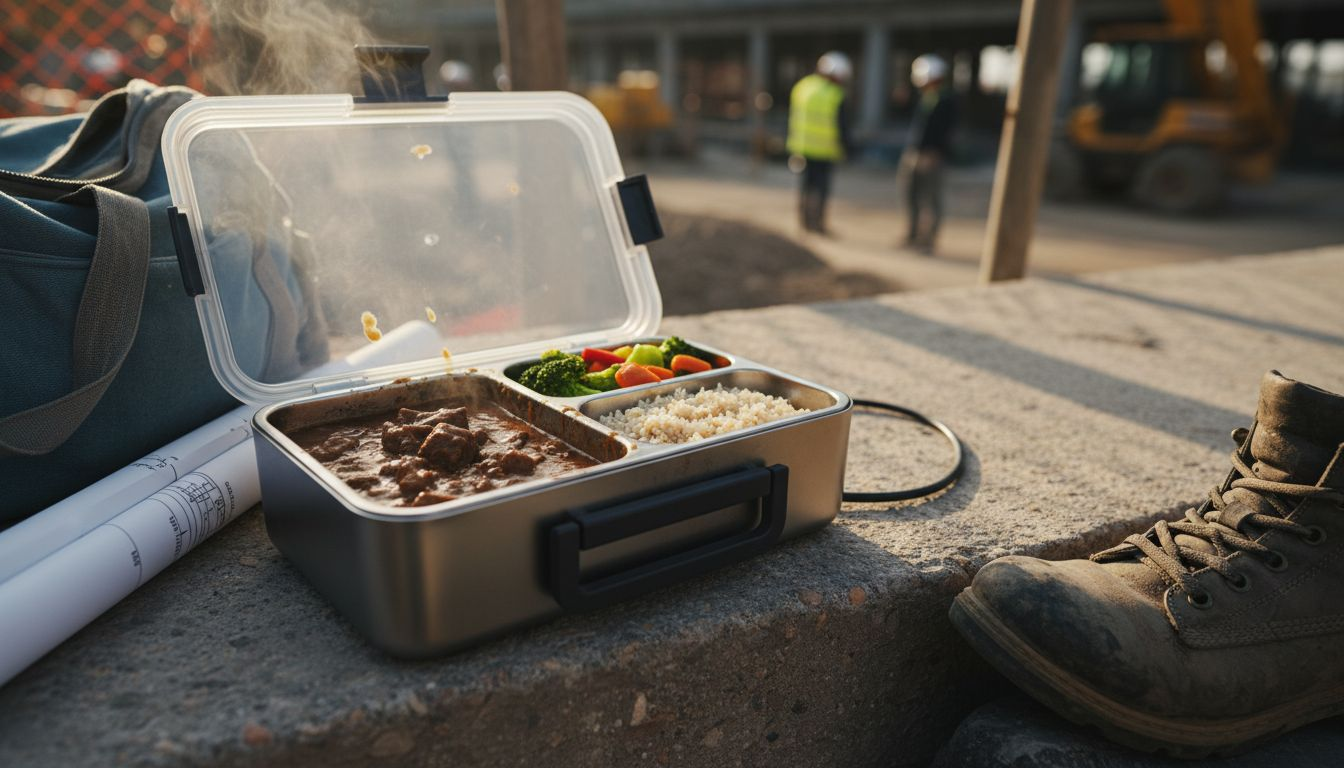
| Feature | 80W Standard Model | Cordless PIRSHGVE | 100W COZYEXPERT |
|---|---|---|---|
| Heating Power | 80W | Battery operated | 100W |
| Capacity | 1.5L | 1.2L | 1.8L |
| Heating Time | 20-30 minutes | 30-50 minutes | 20-30 minutes |
| Power Sources | 12V, 24V, 110V | Battery only | 12V, 24V, 110-230V |
| Special Features | Multi-voltage | 3 heating cycles, IPX4 rated | Dishwasher safe, largest capacity |
| Best For | Vehicle access sites | Remote locations | Bigger appetites, international use |
Pro Tip: Consider cordless models if your typical jobsites lack reliable power access, but keep a backup corded option for extended projects where daily charging becomes inconvenient.
Time-saving and nutritious lunch ideas for electric lunch boxes
Smart meal preparation combined with the right lunch box transforms your break from frustrating to fueling. Focus on dishes that reheat evenly and maintain texture after warming cycles.
Meal prep with bulk cooking of stew, rice bowls, or casseroles allows fast portioning into electric lunch boxes, saving up to 20 minutes during lunch breaks. Spending two hours on Sunday preparing five lunches eliminates daily morning stress and ensures consistent nutrition throughout your work week. Stews and chilis actually improve in flavor after a day in the refrigerator as seasonings meld together.
Pre-packaged reheatable meals combining proteins, carbs, and vegetables, such as chicken rice bowls or beef stews, maximize nutrition and reheating efficiency for workers with limited lunch breaks. One-pot meals like pasta with meat sauce or bean-based chili reheat uniformly and maintain moisture better than separate components. These dishes also create minimal mess if you need to eat quickly or in less than ideal conditions.
Quick lunch prep workflow:
- Cook large batches of your chosen meals on rest days
- Portion servings into containers matching your lunch box capacity
- Label containers with contents and prep date
- Refrigerate or freeze based on consumption timeline
- Transfer one container to your lunch box each morning
- Start heating 25 minutes before your scheduled break
Easy meal ideas for electric lunch boxes:
- Beef and vegetable stew with potatoes
- Chicken fried rice with mixed vegetables
- Chili con carne with beans
- Pasta with bolognese or marinara sauce
- Curry with rice or naan bread
- Meatballs in tomato sauce with pasta
- Pulled pork with coleslaw
- Shepherd’s pie or cottage pie
Balanced meals containing protein, complex carbohydrates, and vegetables heat evenly in 20-30 minutes and provide sustained energy for afternoon work. Include healthy fats from sources like olive oil or avocado to increase calorie density without excessive volume. Check out nutritious lunch recipes for electric lunch boxes for detailed preparation instructions. Understanding meal prep benefits helps you commit to the routine.
Quick situational recommendations for construction lunch solutions
Your daily work environment determines which lunch box features matter most. Matching equipment and meals to your specific situation prevents common frustrations and maximizes break time efficiency.
Workers with consistent vehicle access should prioritize multi-voltage electric lunch boxes that plug into car or truck power systems. These models offer the most reliable heating since vehicles provide steady electricity. Pack one-pot meals like stews or casseroles that tolerate slight movement during transport without separation. The 80W or 100W corded models suit this scenario perfectly.
Remote site workers without fixed power need cordless battery-powered lunch boxes despite slightly longer heating times. The PIRSHGVE model with 10,000mAh capacity ensures you get hot meals even when working miles from outlets. Remember to fully charge the unit overnight and consider bringing a portable power bank for emergency backup on multi-day remote projects.
Long shift workers or those with bigger appetites benefit from larger 1.8L capacity lunch boxes that accommodate substantial portions. The COZYEXPERT model provides extra space for adding side dishes or desserts. Pair these with calorie-dense meals incorporating lean proteins and complex carbs to maintain energy during 10-12 hour workdays.
Workers with limited storage or light carrying preferences should select compact 1.2-1.5L models that fit easily in bags alongside other gear. These lunch boxes weigh less when full and take up minimal space in crowded work vehicles. Focus on nutrient-dense meals that deliver maximum calories per volume, such as pasta dishes with meat sauce or rich curries.
All scenarios benefit from batch meal prepping on rest days to eliminate morning preparation stress and ensure consistent nutrition. Invest 2-3 hours weekly cooking large quantities, then portion into containers matching your lunch box size. This approach saves time, reduces food waste, and guarantees you always have something ready to heat.
Summary comparison table of top electric lunch boxes
This comprehensive comparison helps you evaluate models based on your specific priorities and budget constraints for construction site lunch solutions.
| Specification | 80W Standard | Cordless PIRSHGVE | 100W COZYEXPERT |
|---|---|---|---|
| Heating Power | 80 watts | Battery 10,000mAh | 100 watts |
| Container Capacity | 1.5 liters | 1.2 liters | 1.8 liters |
| Heating Duration | 20-30 minutes | 30-50 minutes | 20-30 minutes |
| Power Compatibility | 12V, 24V, 110V | Battery only, USB-C charging | 12V, 24V, 110-230V |
| Container Material | Stainless steel | Stainless steel | Stainless steel |
| Leak Protection | Silicone seal | Silicone seal | Silicone seal |
| Weather Resistance | Standard | IPX4 rated | Standard |
| Cleaning Method | Hand wash recommended | Hand wash recommended | Dishwasher safe |
| Temperature Range | Fixed heating | 149°F to 194°F adjustable | Fixed heating |
| Heating Cycles | Unlimited with power | Up to 3 per charge | Unlimited with power |
| Portability | Requires power source | Fully portable | Requires power source |
| Weight | Moderate | Lightest | Heaviest |
| Typical Price Range | Mid-range | Premium | Mid to high range |
| Best Value For | Daily vehicle commuters | Remote site workers | Large appetite, frequent use |
Consider your typical workday power access, meal size preferences, and budget when selecting from these options. Models with broader voltage compatibility offer more flexibility as project locations change throughout the year. Cordless options command premium prices but eliminate power access concerns entirely.
Ireland-based construction workers should verify voltage compatibility matches local standards and consider models supporting both European and vehicle power systems if traveling between home and site daily. All three models ship internationally, though delivery times and import considerations vary by retailer.
Explore Portagrub’s solutions to enhance your lunch routine
Taking control of your construction site lunches starts with the right containers and recipes designed for meal prep success. Portagrub’s meal prep containers feature durability and sizing perfectly matched to electric lunch box capacities, making batch cooking and portioning effortless.
Model S meal prep anti leak lids ensure your prepared meals stay fresh and spill-free during transport to jobsites, protecting your lunch box from messy leaks. Pair quality containers with nutritious lunch recipes specifically designed for reheating efficiency and sustained energy throughout demanding workdays. This complete system transforms your lunch routine from stressful to simple.
Frequently asked questions about electric lunch boxes and quick construction lunches
How long do electric lunch boxes take to heat meals?
Most 80-100 watt electric lunch boxes heat pre-cooked refrigerated meals in 20-30 minutes, matching typical construction break periods. Cordless battery models require 30-50 minutes depending on starting temperature and selected heat level. Starting with room temperature meals reduces heating time by approximately 10 minutes compared to straight from refrigerator.
Can I use electric lunch boxes without vehicle power?
Yes, cordless battery-powered models operate independently using built-in 10,000mAh batteries that provide up to three complete heating cycles per charge. These units charge via standard USB-C cables overnight and eliminate reliance on vehicle or outlet power. However, corded models offer unlimited heating capacity when power access exists and typically cost less than battery versions.
What meals reheat best in these lunch boxes?
Moist one-pot meals like stews, curries, chilis, and pasta dishes reheat most evenly and maintain texture better than dry or multi-component meals. Foods with sauces or gravies distribute heat uniformly and prevent drying during the warming process. Rice bowls, casseroles, and braised meats also perform excellently, while sandwiches and salads should not be reheated.
How do I clean and maintain an electric lunch box?
Remove the stainless steel food container and wash separately from electrical components using warm soapy water or dishwasher if rated safe. Wipe the heating base with damp cloths only, never submerging electrical parts in water. Check silicone seals monthly for wear or damage, replacing as needed to maintain leak-proof performance. Store with the lid slightly open to prevent moisture buildup and odors.
Are electric lunch boxes safe to use on construction sites?
Yes, when following basic electrical safety practices like keeping units away from standing water and inspecting cords for damage before each use. Models with IPX4 ratings offer splash resistance suitable for outdoor conditions. Always place lunch boxes on stable, level surfaces during heating to prevent tipping. Unplug or turn off units immediately after heating completes to conserve power and reduce fire risks.